The second National Traditional Flower Arrangement Exhibition was recently held in Ningbo, Zhejiang province, bringing together more than 100 works from across the country and showcasing the preservation and creative development of traditional Chinese floral art.
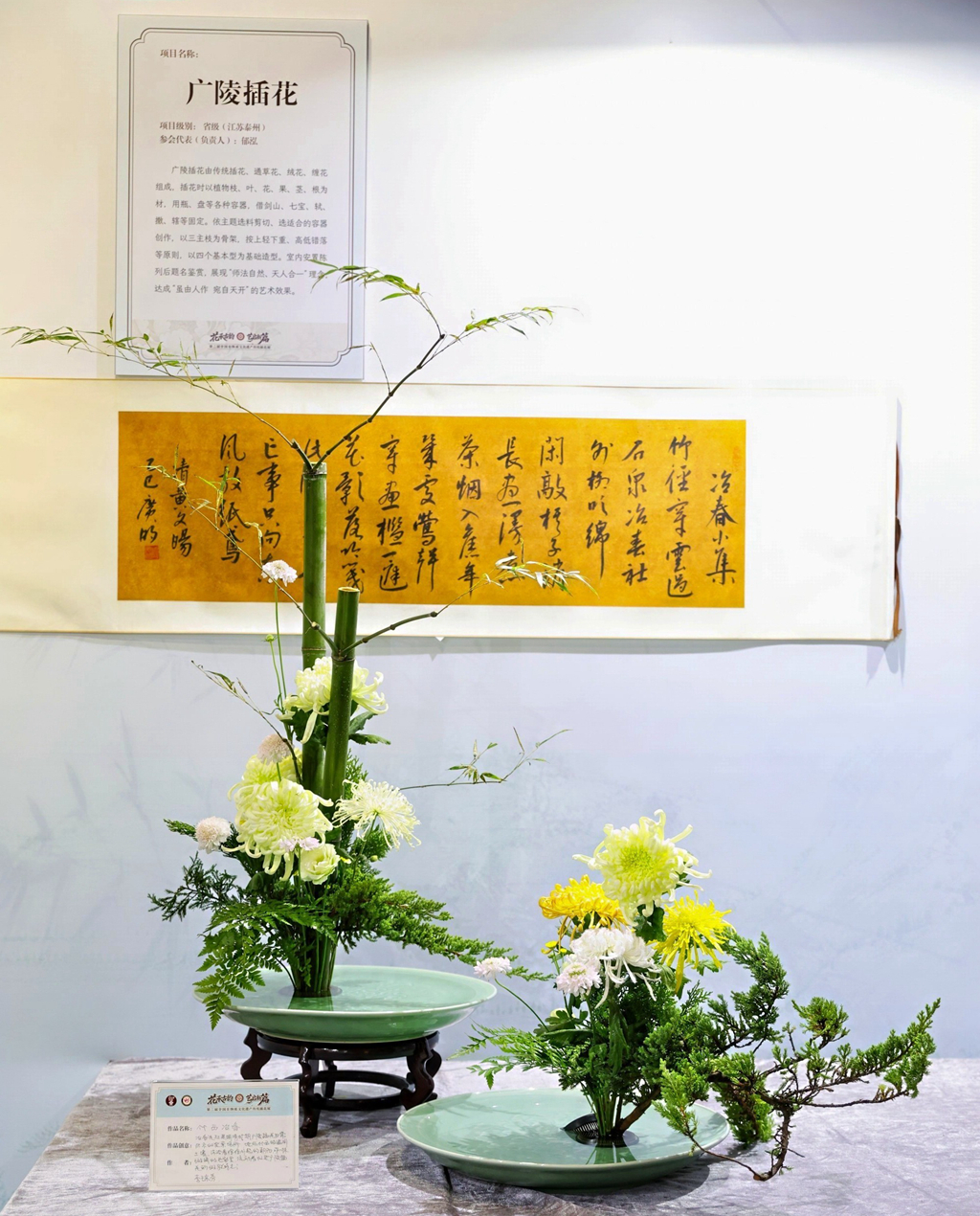
Zhuxi Yechun by Li Qiongfen. [Photo/WeChat account: txzhtx]
Three entries from Taizhou received awards at the event. Zhuxi Yechun, created by Li Qiongfen, draws inspiration from Yechun Flower House, a real display venue used during the Ming and Qing dynasties (1368-1911) for Guangling-style flower arrangement. Using chrysanthemums, bamboo, creeping juniper, and other natural materials, Li paired them with layered plate-shaped vessels to evoke the elegant aesthetic of Guangling floral culture.
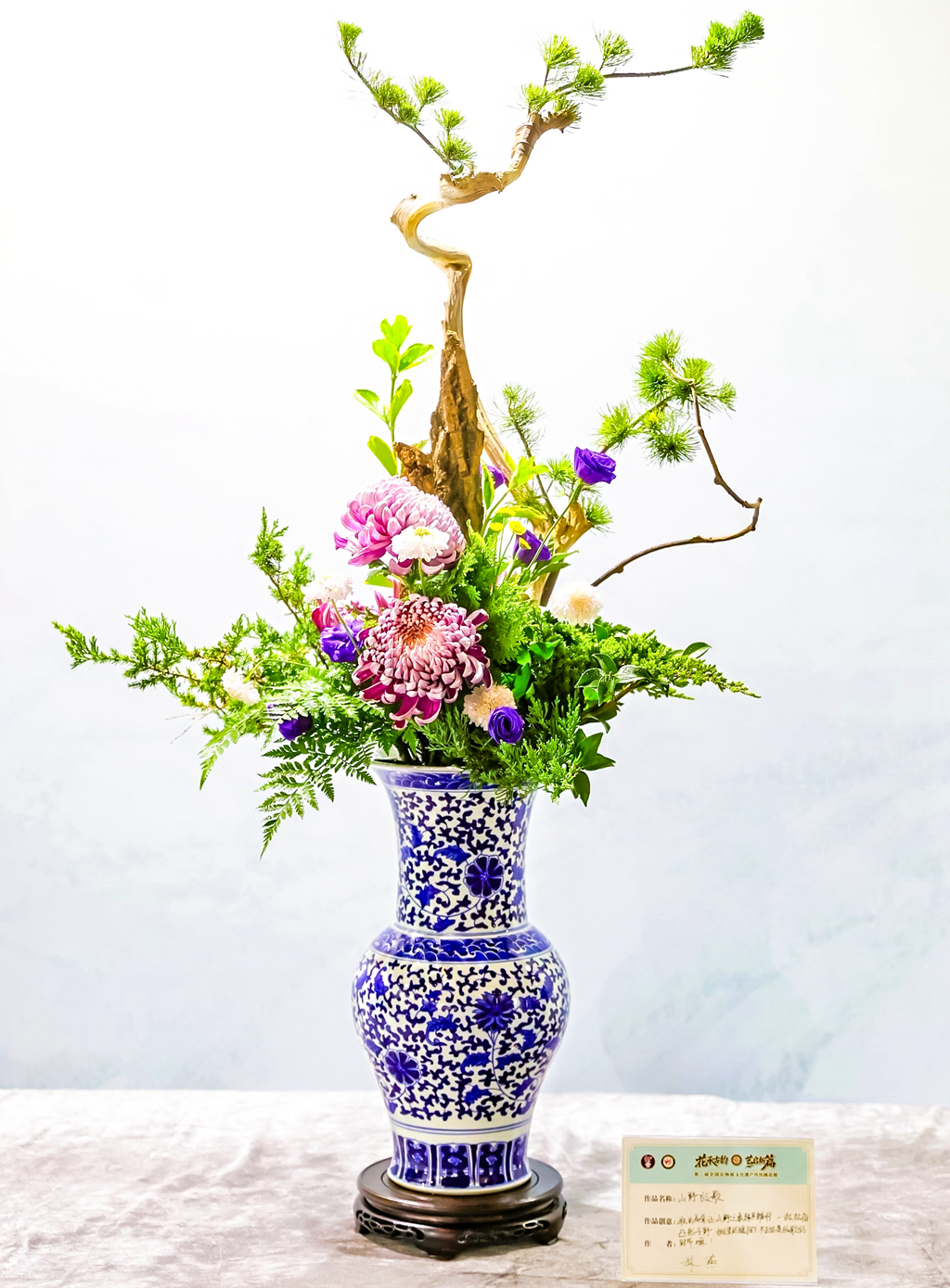
Song of the Hills by Lin Yan. [Photo/WeChat account: txzhtx]
Song of the Hills by Lin Yan features chrysanthemums, five-needle pine, cordyceps, and camellias, set in a tall blue-and-white porcelain vase that helps shape a vivid impression of wild mountain landscapes.
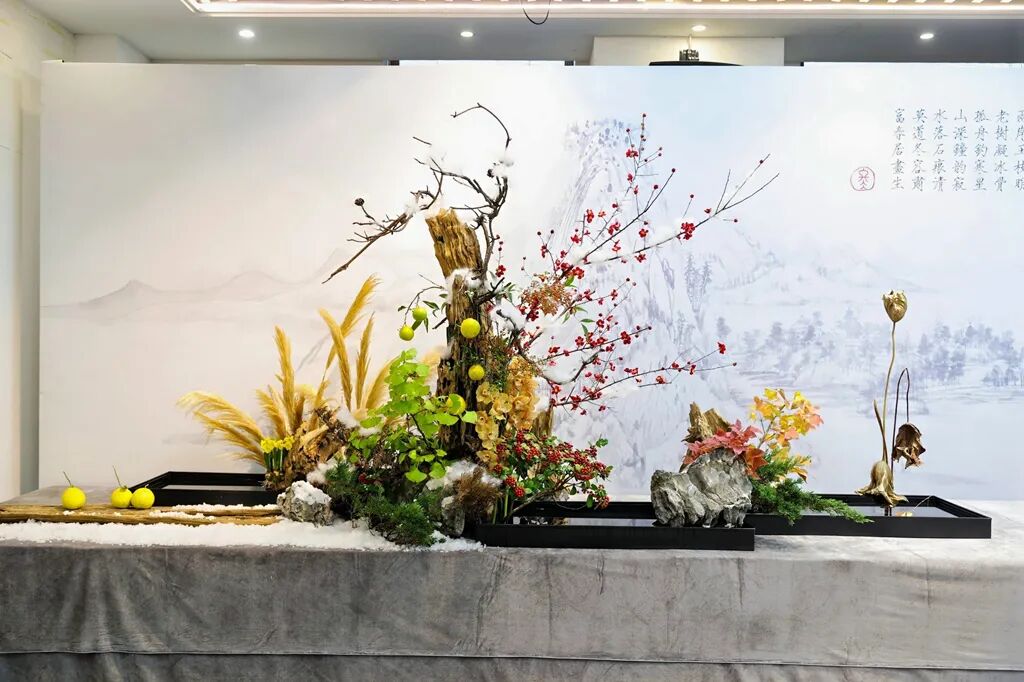
Dwelling in the Fuchun Mountains – Winter. [Photo/WeChat account: txzhtx]
Dwelling in the Fuchun Mountains – Winter, created by Yu Hong, uses an upward-reaching main branch to suggest peaks rising in the distance and side branches that echo forested valleys. Delicate accent flowers bring vitality to the scene, painting landscapes with flowers.
Guangling-style flower arrangement originated during the Spring and Autumn and Warring States periods and has a history of more than 3,000 years. It incorporates locally available plant materials and emphasizes both form and meaning, reflecting Chinese aesthetics and the harmonious beauty of nature.
In recent years, Yu Hong has played an active role in preserving and promoting the art, establishing a floral training school, opening a Guangling floral studio, setting up a dedicated display area at the Taixing Intangible Cultural Heritage Museum, and presenting the art in cultural tourism promotions in South Korea and Japan.